Home of the dragon
The island is the namesake range of Varanus komodoensis. Guests walk dry grassland trails with park rangers to observe dragons, deer, and birdlife — never alone, always with the group.
The namesake island of Komodo National Park — dry savanna, park HQ at Loh Liang, and the home range of the Komodo dragon — a core stop on IslandSail sailing from Labuan Bajo.
Komodo Island sits west of Flores in East Nusa Tenggara, between the Flores and Sape straits. The island is named for the Komodo dragon (Varanus komodoensis) — the world’s largest living lizard — which lives on this dry savanna and on neighbouring islands in the same park. Local communities, including the village of Komodo, have long shared the land with the animal. The name is not a tour slogan; it is how the island and the species are known in this part of Nusa Tenggara.
Western science recorded the dragon in the early 1900s after reports reached Dutch colonial officers. In 1980 the Indonesian government established Komodo National Park around the island and nearby waters. In 1991 the park was inscribed as a UNESCO World Heritage Site. The park headquarters landing at Loh Liang is still where ranger-escorted walks begin.
The island is the namesake range of Varanus komodoensis. Guests walk dry grassland trails with park rangers to observe dragons, deer, and birdlife — never alone, always with the group.
Landings use the official park jetty and ranger post. This is not a village hike like Wae Rebo or a ridge climb like Padar; it is a guided wildlife walk from park headquarters.
Since 1980 the island has sat inside Komodo National Park, later listed by UNESCO. Entry and ranger fees are paid on park days, separate from the sailing fare.
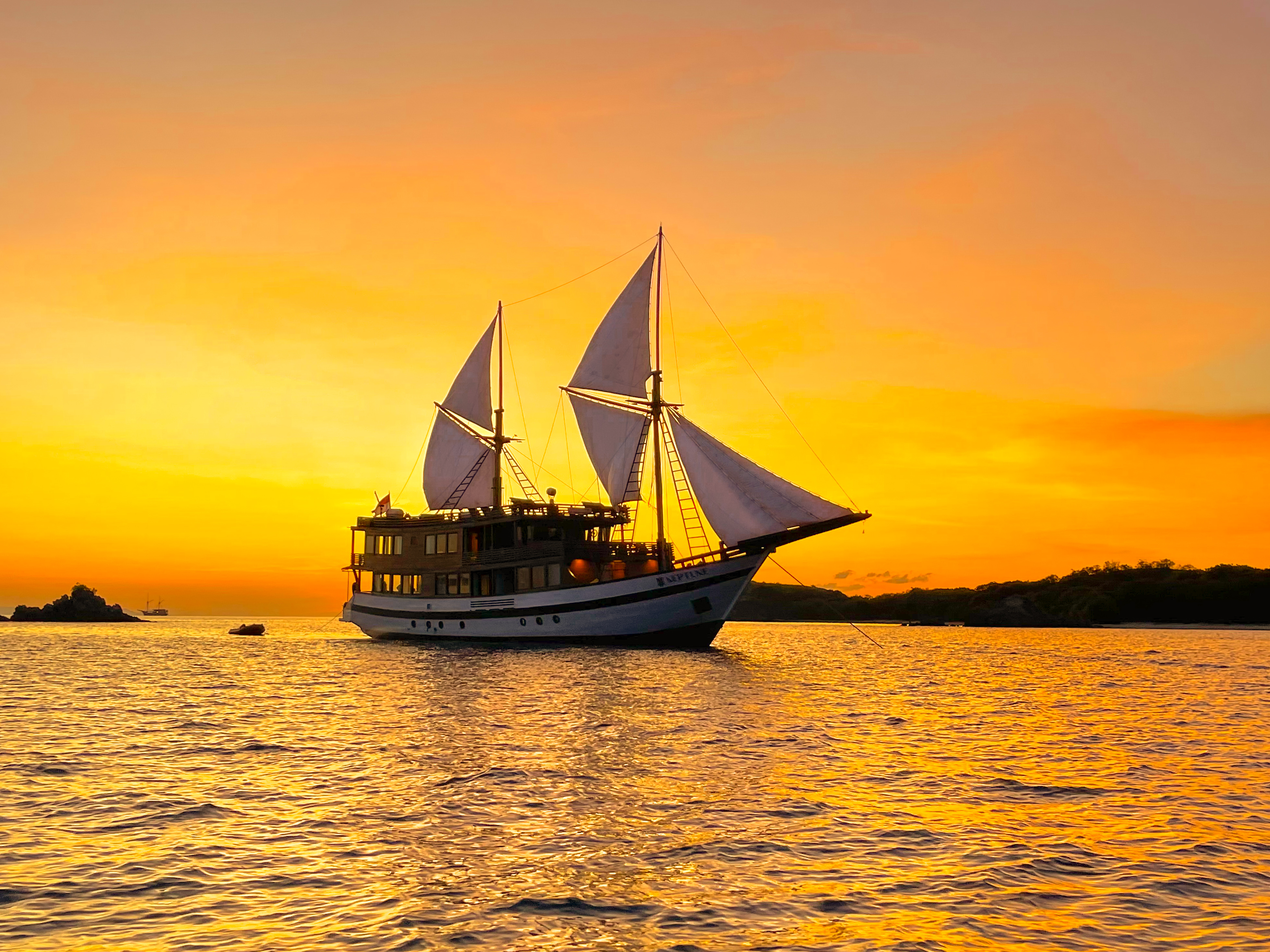
IslandSail.id includes the landing on sailing days from Labuan Bajo Marina, typically with Padar Island, Pink Beach, Taka Makassar, and Manta Point on selected packages.
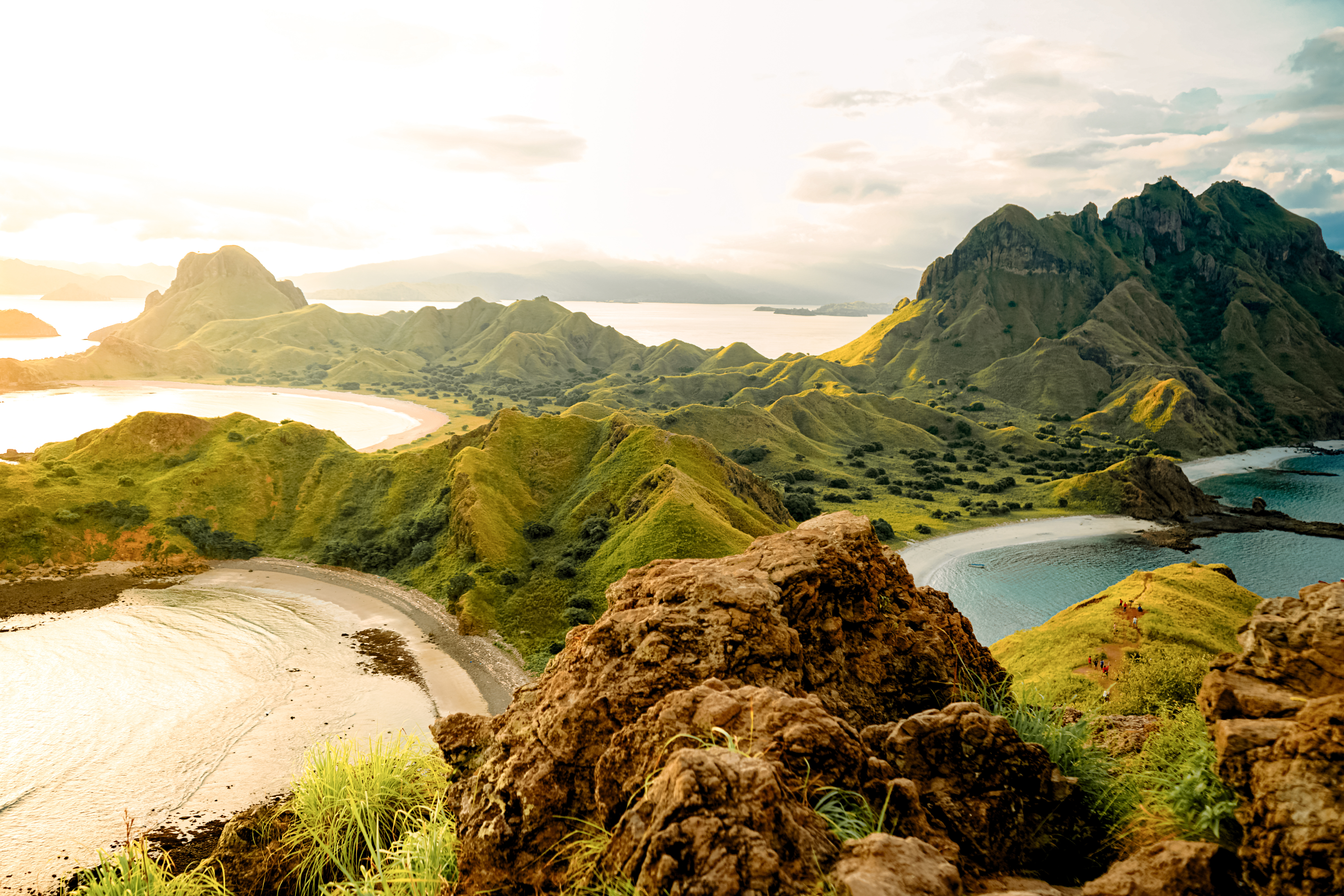
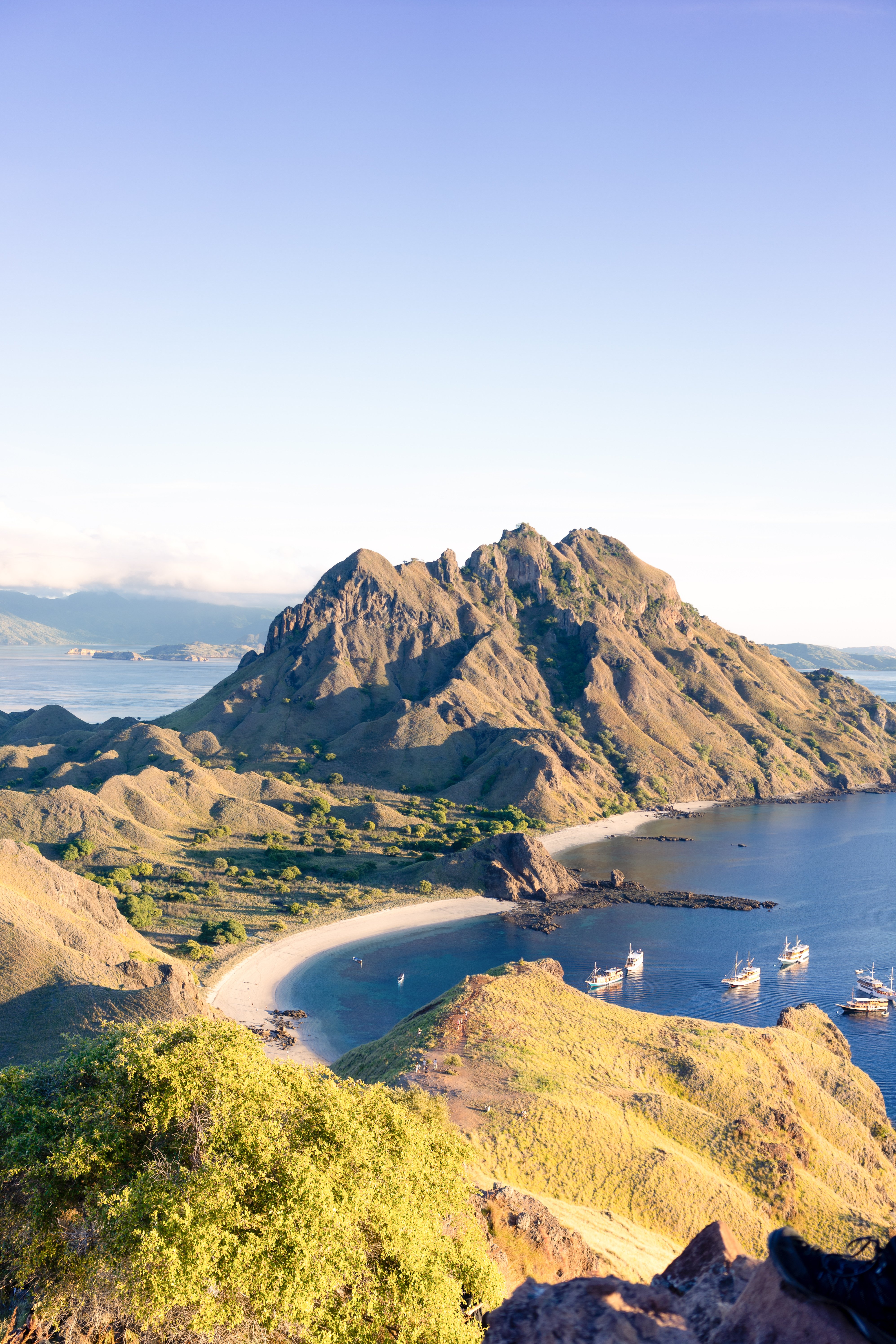
For visitors, Komodo Island is the wildlife chapter of a park day: yellow savanna, monsoon forest patches, and a ranger-led walk from Loh Liang. The climate is dry for much of the year; trails can be hot and dusty. IslandSail.id times the stop around park hours and sea conditions on both day boats and liveaboards. Stay with the ranger group and follow their instructions around the animals.
Closed shoes for dry savanna trails, hat, water bottle, and a dry bag for cameras. Stay with the ranger group. Towels and snorkel kit are provided on sailing days for other stops. Park tickets and ranger fees are paid separately on park days.